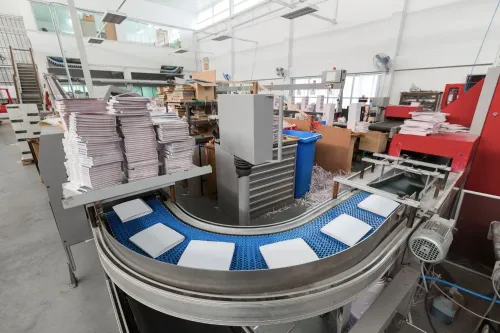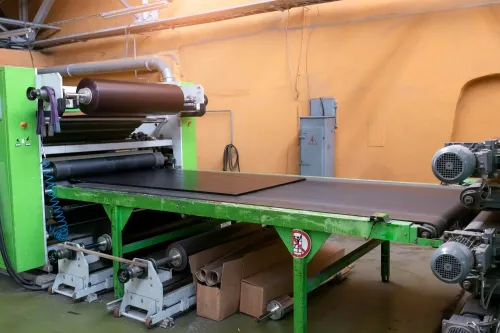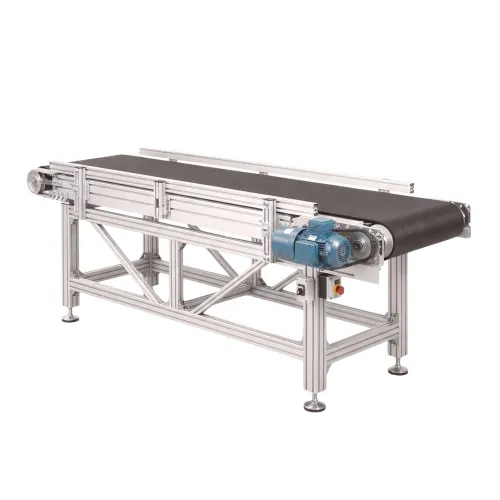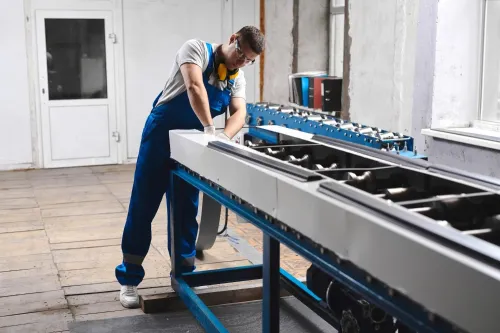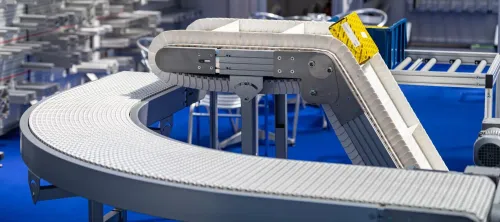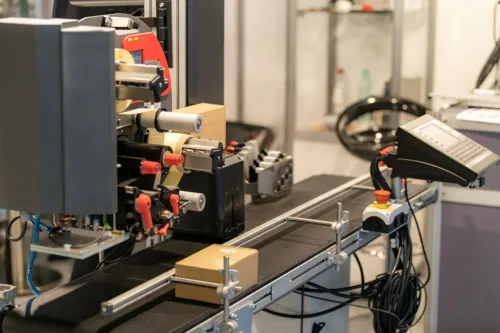
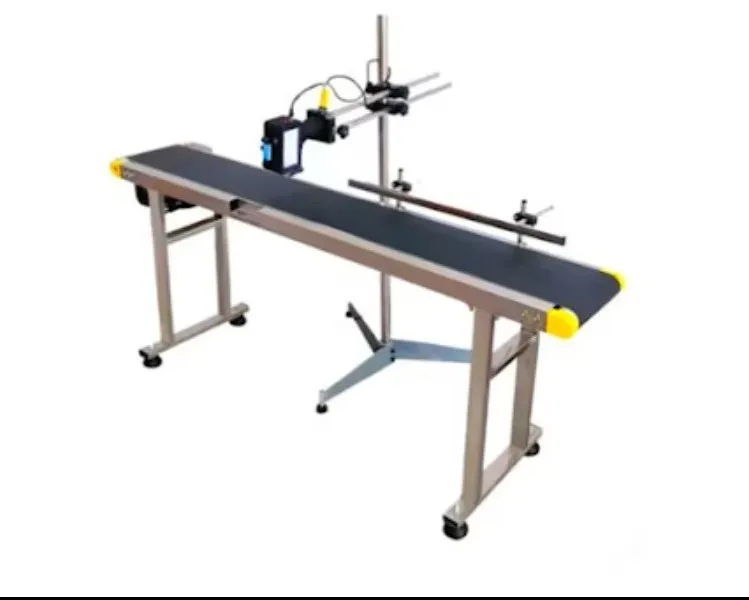
Printing and packaging lines depend on controlled material movement. When cartons, labels, pouches, sheets, or other products move inconsistently, even a well-configured printing or coding system can face alignment problems, production delays, and avoidable operator intervention. A properly selected Printing Belt Conveyor helps create a stable flow between processing stages.
For manufacturers and packaging businesses in Noida, Uttar Pradesh, conveyor selection should begin with the product rather than simply the available floor space. Product dimensions, weight, surface characteristics, printing position, line speed, and the equipment installed before and after the conveyor all influence the final design.
Why Conveyor Stability Matters During Printing
Printing applications often require the product to remain in a predictable position while it passes through a printer, coder, inspection unit, or labeling station. Excessive vibration, belt slippage, or inconsistent speed can affect print placement.
A suitable printing conveyor can help provide:
- Uniform product movement
- Better positioning beneath printing equipment
- Adjustable operating speeds
- Reduced manual product handling
- Easier integration with coding and labeling systems
- More organized production flow
Variable-speed control is particularly useful when production involves different products or printing processes. Operators can adjust conveyor speed according to the required dwell time and throughput.
What Should Businesses Check Before Choosing One?
Belt material deserves careful attention. A lightweight carton and a heavier packaged component do not necessarily require the same belt construction. Businesses should also consider whether the product needs guides to maintain alignment during movement.
Conveyor width is another practical consideration. Selecting a belt that is unnecessarily wide consumes valuable production space, while an undersized conveyor may create handling and stability issues.
The drive arrangement, motor capacity, working height, speed range, frame construction, and maintenance access should also match the application.
In facilities where printing is only one stage of a larger packaging line, integration becomes especially important. The conveyor should receive products smoothly from upstream equipment and transfer them reliably to the next process.
Improving Workflow Without Over-Automating
Automation does not always mean installing the largest possible conveyor system. For many Noida manufacturing and packaging units, a compact printing conveyor positioned correctly can eliminate repeated manual transfers between processes.
Sunrise Conveyors works with industrial material-handling applications where conveyor dimensions and operating characteristics can be matched to actual production requirements. This application-based approach is useful when a standard conveyor does not align with existing machinery.
Businesses evaluating a Printing Belt Conveyor should therefore document their product dimensions, expected production rate, available space, printing equipment specifications, and desired speed range before finalizing the system.
A conveyor that matches these parameters does more than transport products. It creates a controlled link between printing, coding, inspection, packaging, and subsequent handling processes, helping production teams maintain a more predictable workflow.
Keywords