Not every position on a belt conveyor experiences the same load. The area where bulk material first falls onto the belt can experience substantially greater impact than sections where material is already moving steadily. This is why an Impact Idler and a standard carrying idler should not automatically be treated as interchangeable components.
For industrial operations in Meerut, Uttar Pradesh, understanding the difference can help maintenance teams improve conveyor support at loading and transfer zones.
What Makes an Impact Idler Different?
Standard carrying idlers primarily support the loaded conveyor belt during normal movement.
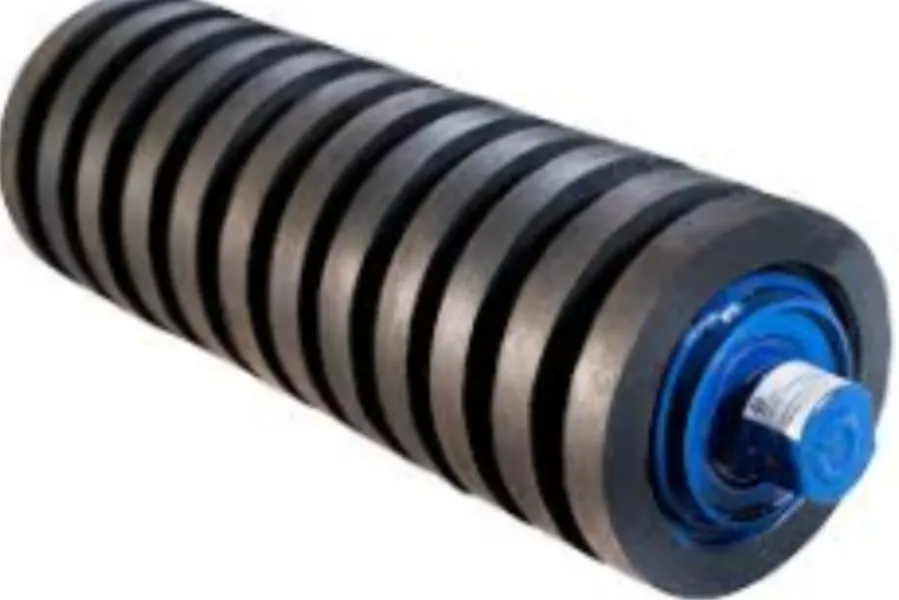
Impact idlers are intended for locations where falling material creates repeated shock loading. Their construction typically incorporates impact-absorbing elements around the roller to help cushion the loading zone.
This makes them particularly relevant beneath:
- Conveyor feed points
- Transfer chutes
- Material loading zones
- Areas receiving larger lumps
- Sections exposed to repeated impact
The exact configuration depends on the conveyor and material characteristics.
When Is a Standard Idler Enough?
Standard idlers remain appropriate across much of a conveyor's carrying length where material has settled and the belt primarily requires continuous support.
Installing impact components everywhere would usually be unnecessary. The better approach is to identify where concentrated loading actually occurs and specify components accordingly.
Signs That a Loading Zone Needs Attention
Maintenance teams should inspect loading areas when they notice recurring belt damage, excessive vibration, damaged rollers, frequent idler replacement, or material spillage around a transfer point.
These symptoms do not automatically prove that impact idlers are the only solution. Chute alignment, loading height, belt speed, material trajectory, and support spacing can also contribute to the problem.
The complete transfer zone should therefore be evaluated.
Choosing the Correct Configuration
Meerut businesses should provide the conveyor manufacturer or component supplier with information such as belt width, material type, approximate lump size, drop height, load rate, existing idler dimensions, and conveyor speed.
This provides a much stronger basis for selection than ordering solely by roller diameter.
Sunrise Conveyors works with conveyor components and industrial material-handling systems, allowing idler requirements to be considered in relation to conveyor design and operating conditions.
An Impact Idler can be particularly valuable where repeated material loading creates shock at a defined point, while conventional carrying idlers remain suitable for normal belt support elsewhere.
The choice is therefore not simply between two types of roller. It is about placing the right support at the right position.
For Meerut plants reviewing frequent conveyor maintenance, inspecting loading zones and comparing component specifications against actual impact conditions can reveal opportunities to improve belt support, reduce unnecessary component replacement, and create a more stable material-transfer process.
Keywords