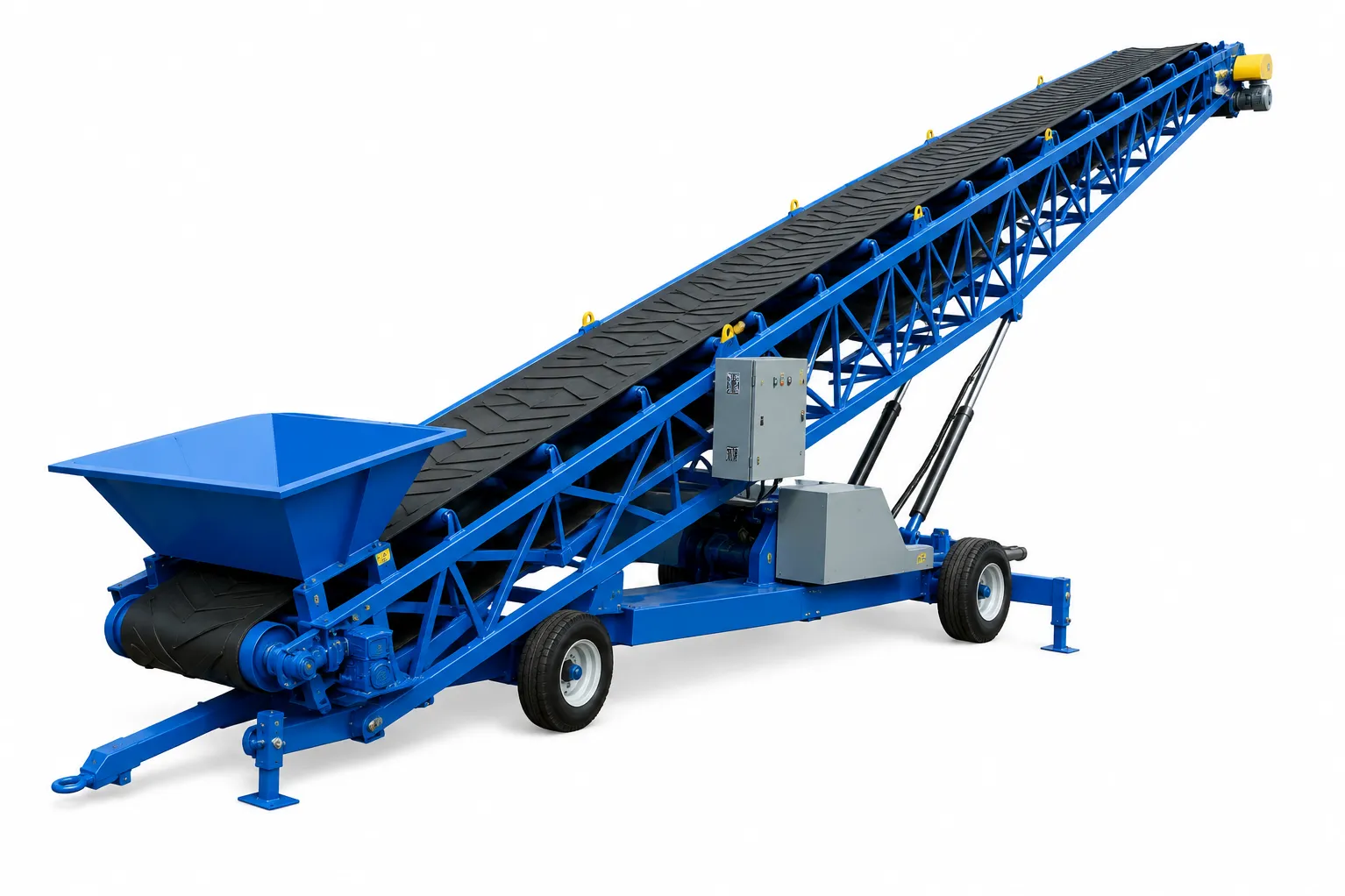
Moving bulk materials from one point to another is only part of an efficient handling operation. Many industries also need materials to be discharged and accumulated systematically. A Stacker Conveyor provides a practical way to transfer material while supporting organized stockpiling and reducing repeated manual or equipment-based handling.
For industrial operations across Delhi and the wider NCR region, stacker conveyor requirements can vary considerably depending on the material, discharge height, available yard or plant space, and required handling capacity.
What Does a Stacker Conveyor Do?
A stacker conveyor transports material toward an elevated discharge point so that it can form a stockpile below. Depending on the design, the system may be fixed or configured to support greater flexibility in material placement.
Stacker conveyors are commonly relevant where businesses handle materials such as:
- Aggregates
- Minerals
- Sand and similar bulk materials
- Industrial raw materials
- Processed bulk products
- Certain agricultural or recycling materials
The objective is not merely to move material faster. It is to reduce unnecessary handling stages between unloading, processing, storage, and further movement.
Why Discharge Height Matters
One of the most important design considerations is the required stacking height. Greater discharge height can increase stockpile capacity within a given footprint, but the conveyor must be designed accordingly.
Material characteristics matter just as much. Particle size, bulk density, abrasiveness, moisture, and flow behaviour can influence belt selection, conveyor inclination, idler arrangement, drive requirements, and structural design.
For example, an abrasive material may demand a different belt and component specification from a lightweight, relatively clean product.
Planning Around the Site
Space constraints are particularly relevant for industrial facilities serving Delhi NCR. Before selecting equipment, businesses should examine:
- Available conveyor length
- Required feeding point
- Desired discharge position
- Maximum stockpile height
- Material handling capacity
- Access for maintenance
- Connection with upstream equipment
Ignoring these factors can result in a conveyor that technically moves the material but does not improve the overall handling process.
A well-planned Stacker Conveyor should fit naturally into the material route. Feed consistency is important because irregular loading can affect belt tracking and overall performance.
Sunrise Conveyors provides conveyor manufacturing solutions for industrial material-handling requirements, where system dimensions and component selection can be considered according to operating conditions.
For Delhi businesses evaluating bulk handling improvements, the useful starting point is a simple material-flow study. Identify where the material enters, where it needs to be stored, how much must be handled per hour, and how often the stockpile needs to be moved.
Once those parameters are clear, selecting an appropriate stacker conveyor becomes far more straightforward and can support a safer, cleaner, and more systematic material-handling operation.
Keywords